Habitat
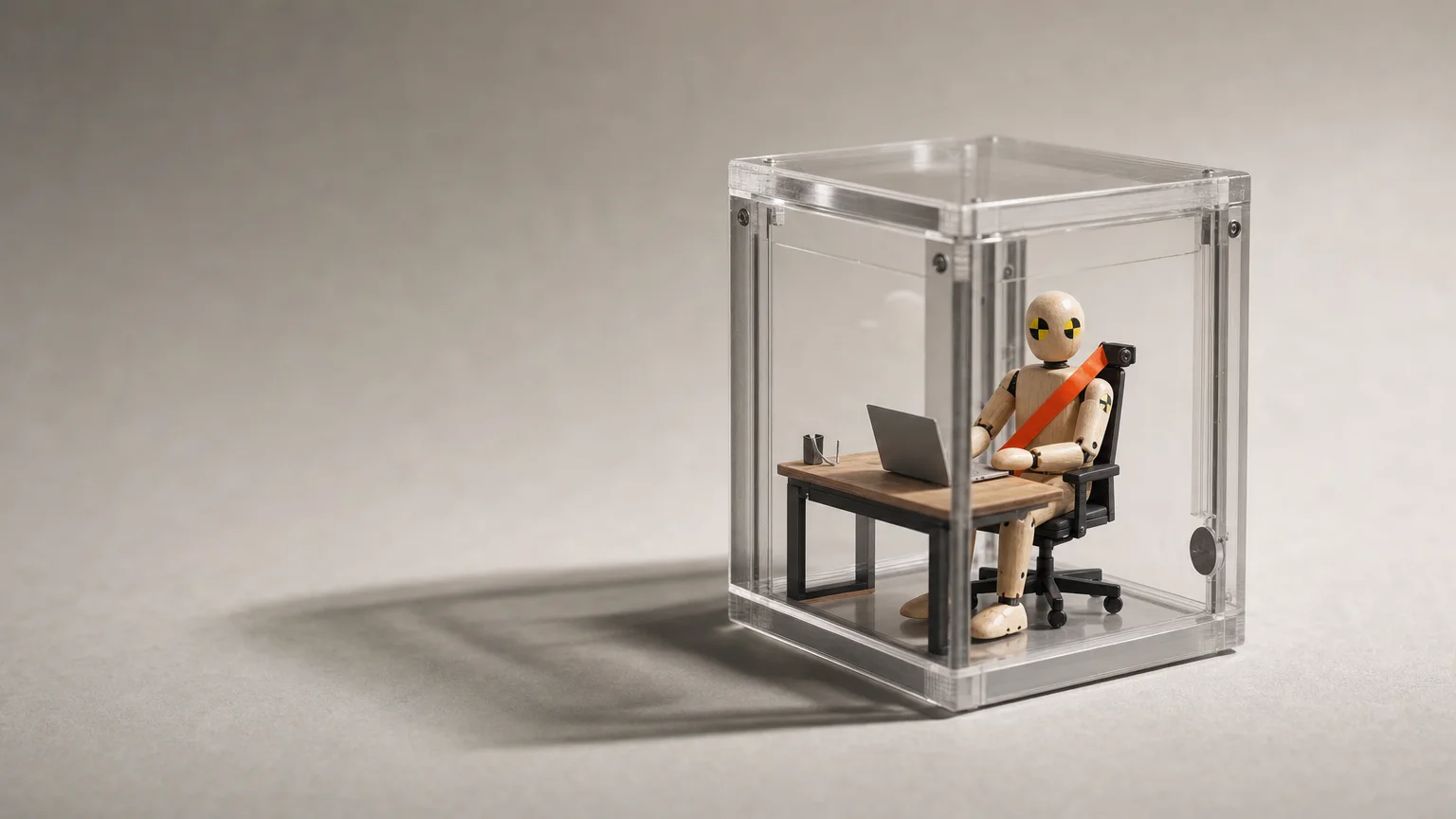
Crash tests for AI agents.
Crash tests for AI agents.





A sandbox copy of your business where AI agents get crash-tested before they touch real customers, money or data. It started in January 2026 as a habit tracker and became this in the summer.
Companies are giving AI agents real jobs: answering customers, updating the CRM, issuing refunds. Most have no safe way to see how an agent behaves before it goes live. The only test is the real company, with real customers and real money.
The numbers are rough. MIT found that 95% of AI pilots deliver no measurable value. Gartner expects more than 40% of agent projects to be cancelled by 2027. We crash-test cars before we put people in them. Agents get the keys on day one.
Habitat is a sandbox copy of your business. It clones the tools your agent touches, like the CRM, helpdesk, payments and email, and fills them with synthetic data. It runs in your own cloud, so no real customer data is involved.
Then it stresses the agent with hundreds of scenarios: normal days, angry customers, edge cases, outages and attacks. Because the sandbox keeps real state, it can check what actually happened, not only what the agent says it did.
The result is an audit report: where the agent works, where it breaks, and whether it is worth deploying. Change the model, the prompt or the workflow, and you run it again. Observability is the autopsy. Habitat is the crash test.
Habitat began in January 2026 as a habit tracker. I built it on React and Supabase. In its first week it had Google sign-in, a calendar dashboard with milestones and recurring tasks, and a swipe-based Today mode for a quick daily check-in.
Every habit had a Bronze, Silver and Gold version, so a bad day still counted. In February I reshaped it into a 30-second weekly review of what you planned against what you actually did. It also got its first logo: a house between cypress trees.
In July 2026 I kept the name and the domain and changed the product. The first new version was an AI operations assistant for small businesses, built around permissions, human approval and an audit log.
A month later I narrowed it to the step that has to come first: testing an agent before anyone trusts it with real work. I rebuilt the site around a single line, crash tests for AI agents, and opened a waitlist.
I tested the idea with a waitlist site in the summer of 2026 and mapped the market and the competition.
The first version ran on React and Supabase, and the waitlist site on Next.js. I test an idea in days and change course quickly.
Next project

AI characters, now on Mac and Deck